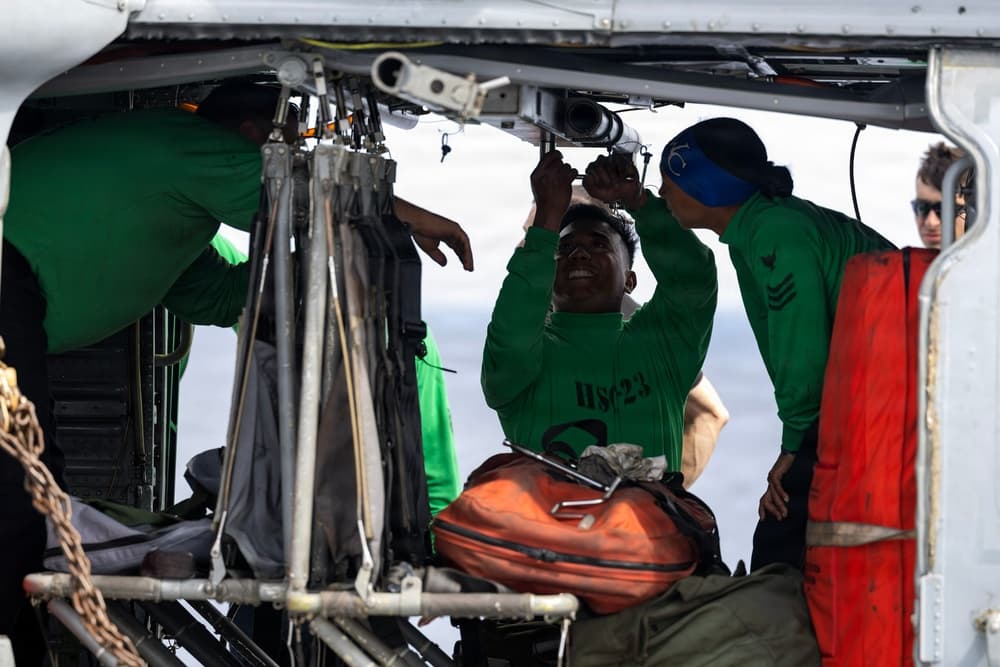
Aviation Structural Mechanic
Aviation Structural Mechanics maintain aircraft structures, hydraulic systems, and safety equipment. They repair airframes, perform corrosion control, and maintain ejection seats.
Overall
Quick Stats
Security Clearance
None
This rate does not require a security clearance.
ASVAB Requirements
Who This Is Best For
Best for precision-focused individuals who enjoy detailed fabrication work — welding, riveting, composite repair. If you want FAA-recognized skills that are in high demand by airlines and defense contractors, this rate builds directly transferable trade credentials. Ideal for someone who takes pride in meticulous craftsmanship.
+Pros
- ✓Strong civilian career transition
–Cons
Real Opinions
+Positive
“Composites, sheet metal, hydraulics -- you learn all of it. The hands-on work is satisfying when you see an aircraft fly that you fixed.”
“AM is a solid rate if you want to work with your hands. Civilian A&P license is within reach after your first enlistment.”
“I would recommend AM to anyone considering it. The training is solid and the community takes care of its own.”
–Critical & Mixed
“The work can be physically demanding and the chemicals you work with are not great for your health long term.”
“Like any rate, AM has its downsides. Long hours, time away from family, and Navy bureaucracy are real.”
“AM work involves a lot of composite material repair and sheet metal work with hazardous chemicals. The solvents, primers, and coatings you work with daily are not healthy long-term, and not every command provides adequate ventilation or protective equipment. The physical toll adds up.”
“Aviation Structural Mechanics do critical work but rarely get the recognition that avionics or engine mechanics receive. The advancement is competitive and the work environment on carriers is harsh — hangars get extremely hot in the summer and you're working with fiberglass dust and paint fumes constantly.”
Recruiter vs Reality
What the recruiter says vs. what it's actually like.
🫡 Recruiter says
“The AM rate offers great training and career advancement opportunities!”
💀 Reality
Source: MyNavyRates researchTraining and advancement are available but vary by command and manning. Ask specific questions about sea/shore rotation, typical duty stations, and advancement rates for AM.
🫡 Recruiter says
“AM is an exciting aviation career.”
💀 Reality
Source: sailor forumsAM is essential but the work is physically demanding. You are working with chemicals, wearing PPE, and doing repetitive repairs. The aircraft are exciting; the daily work is methodical.
🫡 Recruiter says
“Aviation Structural Mechanics keep aircraft airworthy.”
💀 Reality
Source: veteran feedbackAM work is primarily sheet metal repair, composite patching, and structural inspections. It is skilled trade work in a hangar bay, often involving sealants, rivets, and paint.
🫡 Recruiter says
“You'll maintain the airframes of the Navy's most advanced aircraft — it's precision structural work.”
💀 Reality
A large portion of your day is corrosion control — grinding, treating, priming, and painting the same panels over and over because salt air is relentless. You will fight corrosion more than you repair battle damage.
🫡 Recruiter says
“You'll learn composite repair skills that Boeing and Lockheed are desperate to hire.”
💀 Reality
Composite repair skills are in demand, but the amount of composite work you do depends on your platform. Some AMs spend most of their time on sheet metal, hydraulics, or flight controls and rarely touch composites.
🫡 Recruiter says
“You'll get your FAA Airframe certificate and be ready for civilian aviation maintenance.”
💀 Reality
Your experience counts toward the FAA Airframe certificate, but you need to document hours meticulously, study for exams on your own time, and actually take the tests. The A&P cert is the ticket, not just the experience.
🫡 Recruiter says
“You'll work on aircraft that pull 7.5 Gs and land on carriers at 150 knots — the structural stakes are real.”
💀 Reality
The stakes are real, and so is the HAZMAT exposure. You will work with primers, sealants, strippers, and coatings that require respirators. Chromate primers, MEK, and other chemicals are part of daily life. Long-term chemical exposure is a legitimate concern.
🫡 Recruiter says
“The work is varied — you'll do hydraulics, flight controls, egress systems, and structural repair.”
💀 Reality
The work scope is broad on paper, but at the organizational level you often get pigeonholed into one area. The "varied" experience comes over a full career across multiple commands, not in any single tour.
🫡 Recruiter says
“AM is a solid aviation maintenance rate with good career stability.”
💀 Reality
Career stability is real. But the physical toll is significant. You will rivet in awkward positions, crawl into fuel cells, and do heavy lifting daily. Many AMs report chronic back, knee, and shoulder issues by their second enlistment.
Training Pipeline — Total ~16 weeks (4 months)
Ship Date Calculator
Enter your MEPS ship date to see when you'll complete each stage.
Promotion SpeedEarn higher pay fasterSlowManning 95% (balanced)
| Cycle (Year) | Eligible | Selected | Promotion % |
|---|---|---|---|
| E-4252-Spring(2024) | 213 | 79 | 37% |
| E-4252-Fall(2024) | 244 | 66 | 27% |
| E-5252-Spring(2024) | 165 | 51 | 31% |
| E-5252-Fall(2024) | 154 | 56 | 36% |
| E-6252-Spring(2024) | 148 | 41 | 28% |
| E-6252-Fall(2024) | 30 | 30 | 100% |
Bonuses — Click here to see your military pay
Enlistment Bonus
No active bonus for this rate
You May Qualify for a Navy Enlisted Classification (NEC)
Specialties within this rate you can select, some with additional compensation. Each NEC has its own training, bonus potential, and career path.
Primary specialty code for Aviation Structural Mechanic rating
Advanced specialty code for experienced Aviation Structural Mechanic personnel
Potential Civilian Post-Navy Outcomes
Aircraft Structures Technician
Transferability: 7.2/10
$50k–$82k
Free Certifications & Credentials
Certifications and licenses the Navy will pay for free through Navy COOL and on-the-job training.
FAA Airframe & Powerplant (A&P)
FAA
Certified Welder
AWS
Lifestyle5/10
Ship vs. Shore Split
55% / 45%
Deployment Frequency
Moderate
Physical Demand
high — mixed
Watch Standing
Flight schedule dependent, rotating duty days
Watch standing is a 24-hour duty rotation where sailors take turns manning critical positions aboard the ship or at their command. The rotation determines how frequently you stand watch and how much rest time you get between shifts.
Watch qualifications vary by command and platform. Expect to qualify within 90 days of reporting.
Common Duty Stations
—
Schools + spouse jobs
—
Avg waitlist for on-base
95
100 = national avg
—
Schools + spouse jobs
—
Avg waitlist for on-base
135
100 = national avg
—
Schools + spouse jobs
—
Avg waitlist for on-base
92
100 = national avg