Cryptologic Technician Interpretive
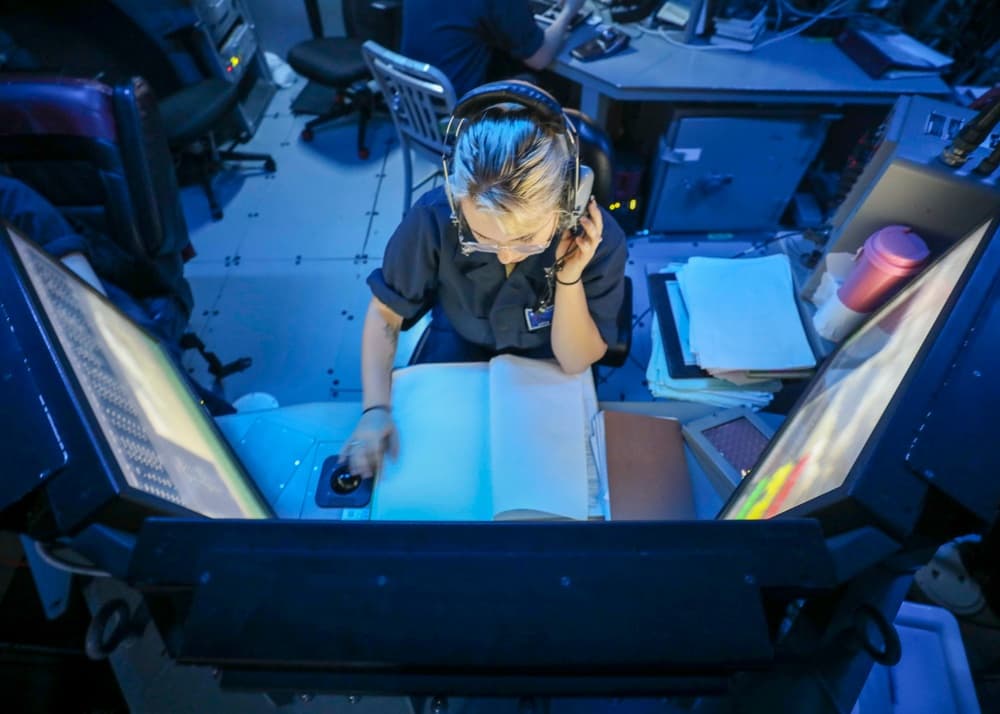
Cryptologic Technician Interpretive specialists are the Navy's language experts. They translate, transcribe, and analyze foreign communications in support of intelligence operations.
Overall
Quick Stats
Security Clearance
Top Secret / Sensitive Compartmented Information~$15K–$50K civilian sector value
Requires a Single Scope Background Investigation (SSBI), including interviews with references, financial review, and a possible polygraph. The process typically takes 6–12 months and is initiated during your training pipeline.
ASVAB Requirements
Who This Is Best For
Best for language learners and linguists who thrive in academic environments and want intellectually rigorous work with real-world intelligence impact. The Defense Language Institute pipeline is demanding but leads to some of the strongest post-Navy career prospects in the intelligence community. Ideal for patient, academically driven individuals.
+Pros
- ✓Active enlistment bonus available
- ✓Strong civilian career transition
–Cons
- ✗Long A-school pipeline
Real Opinions
+Positive
“There is no better place than DLI if you want to learn a language fast and be good at it. It was definitely the most stressful and hardest thing I have done in my life, but it is a great time making friends across branches.”
“Best decision I made was going CTI. The clearance alone is worth it, and the skills transfer directly to six-figure civilian jobs.”
“I deployed on subs, which did mean spending 12 hours in a dark room either translating or listening to white noise. But that same job also got me to see Japan, Singapore, the Philippines, and more. There is room to move up to supervisory roles for those that want it.”
–Critical & Mixed
“I have been a CTI for about ten years now. I have deployed on subs which absolutely did mean spending 12 hours in a dark room either translating or listening to white noise.”
“I have also spent years as essentially a CTR composing reports, living a life barely different than a civilian.”
“Be prepared for shore duty boredom and watch rotations. The clearance process is also stressful and takes forever.”
“CTI can be a good gig, but I do not believe there is a single rate in the Navy that will guarantee you a super high income job on the outside. You learn a language chosen by the Navy, but most CTIs do not actually speak it a lot. Some end up spending 8 hours a day just listening on headphones to chatter.”
Recruiter vs Reality
What the recruiter says vs. what it's actually like.
🫡 Recruiter says
“You will work with cutting-edge cyber technology and get a top secret clearance!”
💀 Reality
Source: MyNavyRates researchThe clearance is real and valuable, but daily work can involve a lot of routine network maintenance and help-desk tickets. Cutting-edge tech varies widely by command.
🫡 Recruiter says
“CTI linguists get stationed in exciting locations worldwide.”
💀 Reality
Source: veteran feedbackCTI can be stationed at interesting locations, but many end up at Fort Meade or other stateside NSA facilities doing shift work. The language you are assigned is based on Navy needs, not your preference.
🫡 Recruiter says
“CTI language training at DLI is like going to college.”
💀 Reality
Source: sailor forumsDLI is academically intense. You study a foreign language 6-7 hours per day, 5 days a week, for up to 64 weeks. The attrition rate is significant. It is not a relaxed college atmosphere.
🫡 Recruiter says
“You get to choose your language at DLI.”
💀 Reality
Your DLAB score determines which tier you qualify for, and the detailer fills seats based on Navy needs. Many CTIs end up with a language they never expected — and you are stuck with it for your career.
🫡 Recruiter says
“DLI in Monterey is like going to college in a beach town.”
💀 Reality
DLI is 6-7 hours of classroom language study daily plus 2-3 hours of homework. Category IV languages run 64 weeks. The attrition rate is significant — washouts get reclassified. Monterey is nice, but you will be too busy studying to enjoy it.
🫡 Recruiter says
“CTIs do exciting translation and intelligence work overseas.”
💀 Reality
Most CTIs end up at a NIOC stateside — often Fort Meade doing shift work in a SCIF. The work is translation of intercepted communications, which can be repetitive. Overseas assignments are less common than recruiters imply.
🫡 Recruiter says
“CTI is mostly shore duty — perfect for families.”
💀 Reality
Genuinely shore-heavy. However, direct support billets deploy with operational units. Some CTIs get joint assignments at NSA facilities with mandatory shift work including nights, weekends, and holidays.
🫡 Recruiter says
“Your language skills will make you highly marketable after the Navy.”
💀 Reality
The language is valuable but perishable. If you stop using it daily, proficiency drops fast. Agencies want active DLPT scores, not expired ones. Maintaining scores is hard without regular practice.
🫡 Recruiter says
“CTI has been simplified to just translation work.”
💀 Reality
The CTI role has narrowed over the years with less analytical training than linguists received previously. Many CTIs report the job feels more like production-line transcription than analytical intelligence work.
Training Pipeline — Total ~72 weeks (17 months)
Ship Date Calculator
Enter your MEPS ship date to see when you'll complete each stage.
Promotion SpeedEarn higher pay fasterSlowManning 78% (undermanned)
| Cycle (Year) | Eligible | Selected | Promotion % |
|---|---|---|---|
| E-4252-Spring(2024) | 58 | 21 | 36% |
| E-4252-Fall(2024) | 143 | 27 | 19% |
| E-5252-Spring(2024) | 162 | 42 | 26% |
| E-5252-Fall(2024) | 109 | 16 | 15% |
| E-6252-Spring(2024) | 49 | 17 | 35% |
| E-6252-Fall(2024) | 112 | 15 | 13% |
Bonuses — Click here to see your military pay
Enlistment Bonus
Bonus by Contract Length
6-Year Contract
$25,000
5-Year Contract
$18,750
How to Qualify
- Sign a contract for this rate at MEPS — bonus eligibility is locked at the time of contract signing
- Ship to boot camp and successfully complete Recruit Training Command (RTC) at Great Lakes, IL
- Complete A-School and any required follow-on training in the CTI pipeline
- Receive your rate assignment and report to your first duty station
- Bonus is typically paid in installments — 50% after completing training, remainder in anniversary payments
Important Details
- •Longer contracts receive higher bonus amounts
- •Bonus amounts are subject to federal income tax withholding (typically 22%)
- •If you fail to complete training or are separated early, you may be required to repay a prorated portion
- •Bonus availability and amounts change frequently based on Navy manning needs — confirm with your recruiter
- •This rate requires a security clearance — failure to obtain clearance may affect bonus eligibility
You May Qualify for a Navy Enlisted Classification (NEC)
Specialties within this rate you can select, some with additional compensation. Each NEC has its own training, bonus potential, and career path.
Primary specialty code for Cryptologic Technician Interpretive rating
Advanced specialty code for experienced Cryptologic Technician Interpretive personnel
Potential Civilian Post-Navy Outcomes
Intelligence Analyst (Language)
Transferability: 8.5/10
$70k–$125k
Government Linguist
Transferability: 9/10
$75k–$130k
Free Certifications & Credentials
Certifications and licenses the Navy will pay for free through Navy COOL and on-the-job training.
Defense Language Proficiency Test
DLI
CompTIA Security+
CompTIA
Lifestyle8/10
Ship vs. Shore Split
20% / 80%
Deployment Frequency
Low
Physical Demand
low — indoor
Watch Standing
4-section watch rotation (8 on / 16 off)
In a 4-section rotation, the crew is divided into four teams. Each team stands a 6-hour watch shift, then has 18 hours off before their next watch. In port, you stand 24-hour duty roughly every 4 days — meaning you stay aboard the ship overnight on your duty day.
Watch stations often in climate-controlled spaces. SCIF access may be required for some watches.