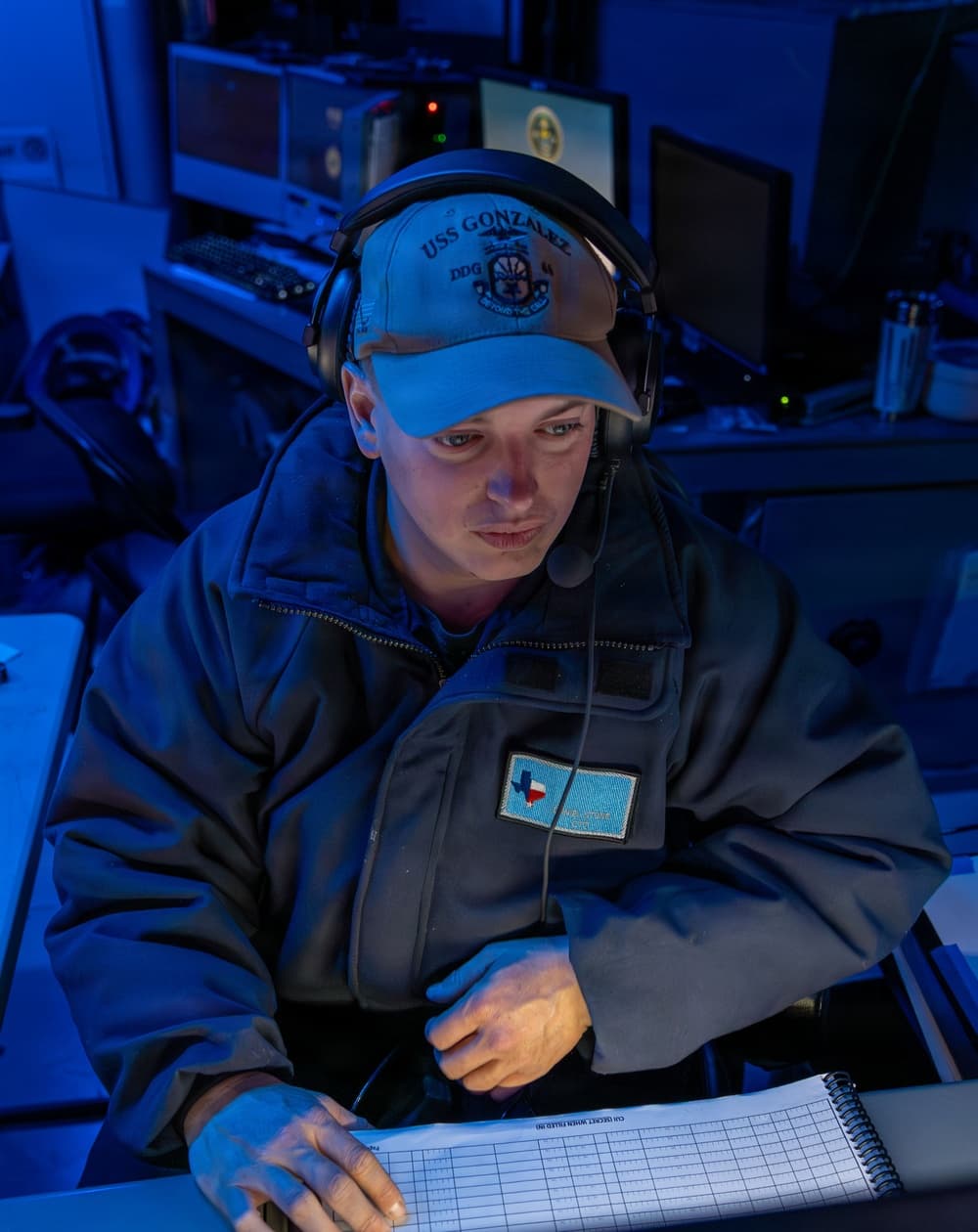
Cryptologic Technician Technical
Operates electronic warfare systems and performs signals analysis.
Overall
Quick Stats
Security Clearance
Top Secret / Sensitive Compartmented Information~$15K–$50K civilian sector value
Requires a Single Scope Background Investigation (SSBI), including interviews with references, financial review, and a possible polygraph. The process typically takes 6–12 months and is initiated during your training pipeline.
ASVAB Requirements
Who This Is Best For
Best for technically sharp individuals who enjoy working with complex electronic systems and want a career blending technical operations with tactical decision-making. Strong pathway to defense industry careers for those who want hands-on work with some of the Navy's most sensitive capabilities.
+Pros
- ✓Strong civilian career transition
–Cons
- ✗Long A-school pipeline
Real Opinions
+Positive
“Job security, pride in work, and service for their country.”
“I learned an extensive amount of pertinent skills that will help me continue to grow as a competent employee outside of service.”
“Best decision I made was going CTT. The clearance alone is worth it, and the skills transfer directly to six-figure civilian jobs.”
–Critical & Mixed
“Benefits, housing, food, and healthcare are great, but long hours, austere environments, and stress are significant drawbacks.”
“Be prepared for shore duty boredom and watch rotations. The clearance process is also stressful and takes forever.”
“The 36/36 sea-shore rotation with 42 months on the first sea tour creates real family separation challenges. You are handling highly sensitive intelligence daily in high-tempo environments where accuracy directly impacts fleet safety, and the pressure never lets up.”
Recruiter vs Reality
What the recruiter says vs. what it's actually like.
🫡 Recruiter says
“You will work with cutting-edge cyber technology and get a top secret clearance!”
💀 Reality
Source: MyNavyRates researchThe clearance is real and valuable, but daily work can involve a lot of routine network maintenance and help-desk tickets. Cutting-edge tech varies widely by command.
🫡 Recruiter says
“CTT is the most tactical CT rating.”
💀 Reality
Source: sailor forumsCTT does have a more operational focus than some CT sub-ratings, especially aboard ships. But the daily reality is still long watches monitoring equipment with occasional bursts of high-tempo activity.
🫡 Recruiter says
“CTT operates electronic warfare systems.”
💀 Reality
Source: veteran feedbackCTT works with electronic warfare and signals collection equipment. The work is technical and involves monitoring electromagnetic signals, but much of it is repetitive watch standing during operations.
🫡 Recruiter says
“CTT is the most tactical CT rating — you'll be in the action.”
💀 Reality
Daily reality is long watches monitoring the AN/SLQ-32 (SEWIP) suite and radar warning receivers. Most of your time is staring at displays waiting for threat emitters.
🫡 Recruiter says
“CTT gets great shore duty assignments.”
💀 Reality
CTT is one of the most sea-heavy CT sub-ratings. Expect significant time on destroyers, cruisers, and carriers. Sea/shore rotation is weighted heavily toward sea duty compared to other CT rates.
🫡 Recruiter says
“CTT A-school is short — only 12 weeks at Corry Station.”
💀 Reality
A-school covers radar theory, ELINT analysis, and collection equipment. After that, months of intensive qualifications on your ship's specific systems. The qualification timeline feels relentless.
🫡 Recruiter says
“CTT provides critical anti-ship missile defense.”
💀 Reality
CTT does support ASMD by detecting threat radar emissions. Important work, but the day-to-day of tracking electromagnetic emitters is methodical and repetitive. Critical moments are a small fraction of total watch time.
🫡 Recruiter says
“CTT skills translate to great defense industry jobs.”
💀 Reality
Defense contractors like Raytheon, Northrop, and L3Harris want CTTs. But most entry-level positions want certifications and often a degree. A first-term CTT may start at $55K-$70K, not the six figures implied.
🫡 Recruiter says
“CTT is all electronic warfare — very high-tech work.”
💀 Reality
Junior CTTs also get tasked with general shipboard duties — watchbills, working parties, cleaning stations, and collateral duties. Your rate does not exempt you from sweepers or painting.
Training Pipeline — Total ~30 weeks (7 months)
Ship Date Calculator
Enter your MEPS ship date to see when you'll complete each stage.
Promotion SpeedEarn higher pay fasterSlowManning 80% (E-4/E-5)
| Cycle (Year) | Eligible | Selected | Promotion % |
|---|---|---|---|
| E-4252-Spring(2024) | 161 | 105 | 65% |
| E-4252-Fall(2024) | 235 | 64 | 27% |
| E-5252-Spring(2024) | 180 | 21 | 12% |
| E-5252-Fall(2024) | 115 | 29 | 25% |
| E-6252-Spring(2024) | 118 | 15 | 13% |
| E-6252-Fall(2024) | 60 | 23 | 38% |
Bonuses — Click here to see your military pay
Enlistment Bonus
No active bonus for this rate
You May Qualify for a Navy Enlisted Classification (NEC)
Specialties within this rate you can select, some with additional compensation. Each NEC has its own training, bonus potential, and career path.
Primary specialty code for Cryptologic Technician Technical rating
Advanced specialty code for experienced Cryptologic Technician Technical personnel
Potential Civilian Post-Navy Outcomes
SIGINT Analyst
Transferability: 8/10
$60k–$100k
Lifestyle7/10
Ship vs. Shore Split
40% / 60%
Deployment Frequency
Moderate
Physical Demand
low — indoor
Watch Standing
4-section watch rotation (8 on / 16 off)
In a 4-section rotation, the crew is divided into four teams. Each team stands a 6-hour watch shift, then has 18 hours off before their next watch. In port, you stand 24-hour duty roughly every 4 days — meaning you stay aboard the ship overnight on your duty day.
Watch stations often in climate-controlled spaces. SCIF access may be required for some watches.
Media & Videos
Direct Links (if videos are blocked)