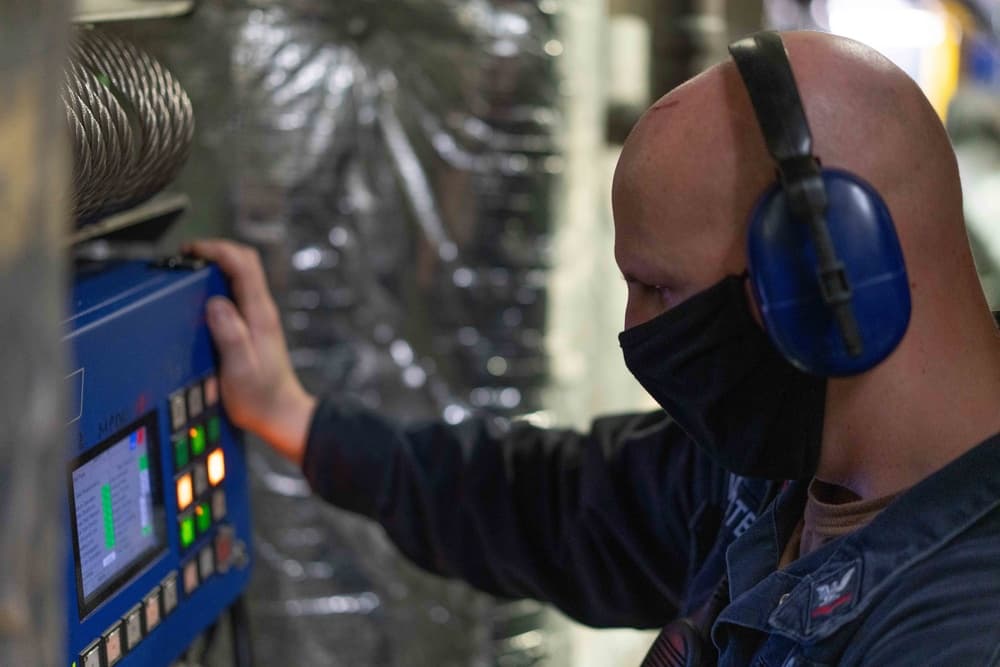
Engineman
Enginemen operate and maintain diesel engines, gas turbines, and ship propulsion systems. They manage fuel systems, air conditioning, and auxiliary machinery.
Overall
Quick Stats
Security Clearance
None
This rate does not require a security clearance.
ASVAB Requirements
Who This Is Best For
Best for mechanically inclined individuals who want steady, hands-on work with big engines and transferable skills in marine engineering, power plant operations, and heavy equipment maintenance. Solid advancement with a practical trade that's always in demand.
+Pros
- ✓Strong civilian career transition
–Cons
- ✗Significant sea duty
Real Opinions
+Positive
“I am biased as hell, but I think Engineman is the best engineering rate, maybe one of the best rates for someone who likes to work with their hands.”
“Engineering rates get a bad rap but the job security and trade skills are legit. I went straight into a union job.”
“I worked on diesel engines and loved it. Experienced Enginemen promote well and transition very successfully into civilian careers as marine diesel mechanics, power plant operators, and merchant mariners. The Navy COOL program funds certifications that civilian employers value.”
–Critical & Mixed
“EN can be a great rate, and you have decent advancement rates so study hard and make rank.”
“On a diesel ship, the EN will work in the propulsion areas of the ship. It can get VERY hot in those areas. It is a dirty job too.”
“Underway life in engineering is hot, loud, and exhausting. You will stand watch in some miserable conditions.”
Recruiter vs Reality
What the recruiter says vs. what it's actually like.
🫡 Recruiter says
“Engineering rates are always in demand and you will learn a valuable trade!”
💀 Reality
Source: MyNavyRates researchThe trade skills are real but underway life in engineering spaces is hot, loud, and physically demanding. Watch rotations can be exhausting, especially on older ships.
🫡 Recruiter says
“EN is a great stepping stone to a civilian mechanic career.”
💀 Reality
Source: sailor forumsThe fundamentals transfer but civilian diesel mechanics need ASE certifications. The Navy will fund these through COOL if you apply, but many ENs do not take advantage of it.
🫡 Recruiter says
“Enginemen work on diesel engines just like civilian mechanics.”
💀 Reality
Source: veteran feedbackEN work aboard ships involves maintaining diesel generators, small boats, and auxiliary equipment. The technology is often older than what civilian shops use. You will spend a lot of time doing PMS checks.
🫡 Recruiter says
“Enginemen work on diesel engines and propulsion — like being a marine mechanic.”
💀 Reality
Most of your time is preventive maintenance — changing filters, checking oil, greasing fittings, and logging readings. The engine room is hot, loud, and you will wear hearing protection constantly.
🫡 Recruiter says
“ENs have diverse assignments — you could work on anything from carriers to small boats.”
💀 Reality
Carriers use gas turbines or nuclear power, not diesels. ENs primarily serve on amphibious ships, support vessels, and small craft. "Diverse" often means "not a destroyer."
🫡 Recruiter says
“EN skills transfer directly to civilian diesel mechanic jobs.”
💀 Reality
The fundamentals transfer, but civilian shops use different diagnostic tools. You still need ASE certifications or manufacturer-specific training to be competitive.
🫡 Recruiter says
“Enginemen keep the ship moving — you're essential to the mission.”
💀 Reality
Because you are essential, the engine room stays staffed 24/7. You stand watch around the clock monitoring temperatures, pressures, and RPMs. Being essential means less sleep, not more recognition.
🫡 Recruiter says
“EN is a great rate with solid advancement.”
💀 Reality
EN is smaller, which can mean faster advancement in some cycles but also fewer billets. A small community means everyone knows your reputation, good or bad.
🫡 Recruiter says
“Enginemen also learn about refrigeration, air conditioning, and auxiliary systems.”
💀 Reality
You maintain HVAC, air compressors, purifiers, and other auxiliaries in addition to diesels. This means more PMS responsibilities. When the CO's stateroom AC breaks, guess who gets the urgent call.
Training Pipeline — Total ~18 weeks (4 months)
Ship Date Calculator
Enter your MEPS ship date to see when you'll complete each stage.
Promotion SpeedEarn higher pay fasterSlowManning 90% (balanced)
| Cycle (Year) | Eligible | Selected | Promotion % |
|---|---|---|---|
| E-4252-Spring(2024) | 205 | 75 | 37% |
| E-4252-Fall(2024) | 227 | 102 | 45% |
| E-5252-Spring(2024) | 65 | 14 | 22% |
| E-5252-Fall(2024) | 135 | 57 | 42% |
| E-6252-Spring(2024) | 62 | 31 | 50% |
| E-6252-Fall(2024) | 141 | 40 | 28% |
Bonuses — Click here to see your military pay
Enlistment Bonus
No active bonus for this rate
You May Qualify for a Navy Enlisted Classification (NEC)
Specialties within this rate you can select, some with additional compensation. Each NEC has its own training, bonus potential, and career path.
Primary specialty code for Engineman rating
Advanced specialty code for experienced Engineman personnel
Potential Civilian Post-Navy Outcomes
Diesel Mechanic
Transferability: 7/10
$48k–$78k
Power Plant Operator
Transferability: 7.5/10
$52k–$95k
Lifestyle5/10
Ship vs. Shore Split
70% / 30%
Deployment Frequency
High
Physical Demand
high — indoor
Watch Standing
3-section underway, 4-section in port
In a 4-section rotation, the crew is divided into four teams. Each team stands a 6-hour watch shift, then has 18 hours off before their next watch. In port, you stand 24-hour duty roughly every 4 days — meaning you stay aboard the ship overnight on your duty day.
Watch qualifications vary by command and platform. Expect to qualify within 90 days of reporting.
Common Duty Stations
—
Schools + spouse jobs
—
Avg waitlist for on-base
95
100 = national avg
—
Schools + spouse jobs
—
Avg waitlist for on-base
135
100 = national avg
—
Schools + spouse jobs
—
Avg waitlist for on-base
92
100 = national avg