
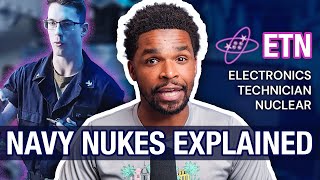
Electronics Technician Nuclear
Maintains nuclear reactor instrumentation and control systems.
Overall
Quick Stats
Security Clearance
Secret~$3K–$15K civilian sector value
Requires a National Agency Check with Local Agency Check and Credit Check (NACLC). Processing typically takes 1–3 months and is initiated early in your training pipeline.
ASVAB Requirements
Who This Is Best For
Best for top-performing students who want nuclear-level electronics training and a guaranteed high-paying career path. If you have exceptional math and science aptitude and can handle an intense academic pipeline, civilian careers routinely start above $80K with rapid advancement in nuclear power and engineering.
+Pros
- ✓Strong civilian career transition
–Cons
- ✗Long A-school pipeline
- ✗Significant sea duty
Real Opinions
+Positive
“Nuke life is brutal but the bonuses and civilian options are insane. I walked into a $90k+ job right out.”
“ETN combines the best of electronics and nuclear power. You maintain reactor instrumentation, control systems, and electrical distribution for a nuclear power plant. The technical depth is unmatched — civilian nuclear plants, data centers, and utility companies all want former ETNs. The six-figure civilian career path is real and well-documented.”
“ETN advancement is fast — auto E-4 after prototype and most make E-5 within a few years. The reenlistment bonuses are enormous, often $75K-$100K+. The nuclear training counts toward over 50 college credits. If you can survive the pipeline and the fleet, you leave the Navy with skills that command premium civilian salaries.”
–Critical & Mixed
“It is not uncommon to work 14-hour days, and you likely will not get a shore duty assignment for several years.”
“The training pipeline is brutal but what you learn is genuinely world-class. Civilian nuclear power plants actively recruit Navy ETNs.”
“The reenlistment bonus is massive for a reason. They know what they are asking you to sacrifice.”
“The hours are absolutely brutal. 12-16 hour days in the plant are normal. Your social life will suffer.”
Recruiter vs Reality
What the recruiter says vs. what it's actually like.
🫡 Recruiter says
“Nuclear program pays huge bonuses and you will have unlimited civilian job options!”
💀 Reality
Source: MyNavyRates researchBonuses are real but come with a 6-year contract minimum. The training pipeline is 2+ years, and underway hours in the plant are grueling. Civilian options are excellent but you earn every penny.
🫡 Recruiter says
“ETN has guaranteed fast promotion.”
💀 Reality
Source: sailor forumsNuclear rates do tend to promote faster, but it is not guaranteed. You still need to perform well on advancement exams and evaluations. The pipeline attrition also means some never make it to the fleet.
🫡 Recruiter says
“ETN is the most technically advanced rating in the Navy.”
💀 Reality
Source: veteran feedbackETN maintains reactor plant electronics and instrumentation on nuclear vessels. The technical depth is genuine but the lifestyle is demanding: long deployments, high-pressure watchstanding, and the weight of nuclear safety.
🫡 Recruiter says
“ETNs are the brains of the nuclear program — you maintain reactor instrumentation and controls.”
💀 Reality
The work is procedure-heavy and heavily supervised. "Maintaining instrumentation" often means calibrating the same sensors on a recurring PMS cycle. Creative problem-solving is rare; strict compliance is the culture.
🫡 Recruiter says
“ETN is the most technical rate in the Navy — perfect for smart, motivated people.”
💀 Reality
Power School demands academic performance. The curriculum is calculus-based physics, reactor theory, and thermodynamics crammed into six months. Students who coasted through high school on talent often hit a wall.
🫡 Recruiter says
“Nuclear ETs can write their own ticket in civilian life.”
💀 Reality
Instrumentation and controls techs start at $80-130K in power generation and defense contracting. But you earn that resume through years of grueling watch rotations and a quality of life that ranks among the worst in the Navy.
🫡 Recruiter says
“Nuke bonuses are huge — the Navy pays you more because you're the best.”
💀 Reality
The Navy pays nuke bonuses because retention is dismal. Nuclear-trained sailors work 80-100+ hour weeks underway with port-and-starboard watch rotations that leave minimal recovery time.
🫡 Recruiter says
“ETNs get advanced electronics training beyond conventional ETs.”
💀 Reality
Your training is narrowly focused on reactor plant instrumentation — not general electronics. Conventional ETs work on radars and comms with broader civilian applicability. Translating "reactor instrumentation" to a civilian resume takes deliberate effort.
🫡 Recruiter says
“You'll be on a carrier or submarine — the most prestigious platforms.”
💀 Reality
Submarines mean months underwater with no sunlight, no phone calls home, and shared racks. Carriers mean a reactor department buried deep in the ship. "Prestigious platform" does not mean comfortable living.
Training Pipeline — Total ~86 weeks (20 months)
Ship Date Calculator
Enter your MEPS ship date to see when you'll complete each stage.
Promotion SpeedEarn higher pay fasterAverageManning 80% (E-4/E-5)
| Cycle (Year) | Eligible | Selected | Promotion % |
|---|---|---|---|
| E-4252-Spring(2024) | 198 | 100 | 51% |
| E-4252-Fall(2024) | 137 | 100 | 73% |
| E-5252-Spring(2024) | 134 | 63 | 47% |
| E-5252-Fall(2024) | 112 | 65 | 58% |
| E-6252-Spring(2024) | 123 | 27 | 22% |
| E-6252-Fall(2024) | 87 | 21 | 24% |
Bonuses — Click here to see your military pay
Enlistment Bonus
No active bonus for this rate
You May Qualify for a Navy Enlisted Classification (NEC)
Specialties within this rate you can select, some with additional compensation. Each NEC has its own training, bonus potential, and career path.
Primary specialty code for Electronics Technician Nuclear rating
Advanced specialty code for experienced Electronics Technician Nuclear personnel
Potential Civilian Post-Navy Outcomes
Nuclear Technician
Transferability: 9/10
$72k–$115k
Lifestyle4/10
Ship vs. Shore Split
60% / 40%
Deployment Frequency
Moderate
Physical Demand
low — indoor
Watch Standing
3-section underway, 4-section in port
In a 4-section rotation, the crew is divided into four teams. Each team stands a 6-hour watch shift, then has 18 hours off before their next watch. In port, you stand 24-hour duty roughly every 4 days — meaning you stay aboard the ship overnight on your duty day.
Reactor watch stations require significant qualification time. Expect 6+ months of intensive watch qual.
Media & Videos

Direct Links (if videos are blocked)