 GSE
GSEGas Turbine Systems Technician Electrical(GSE Navy Rating)
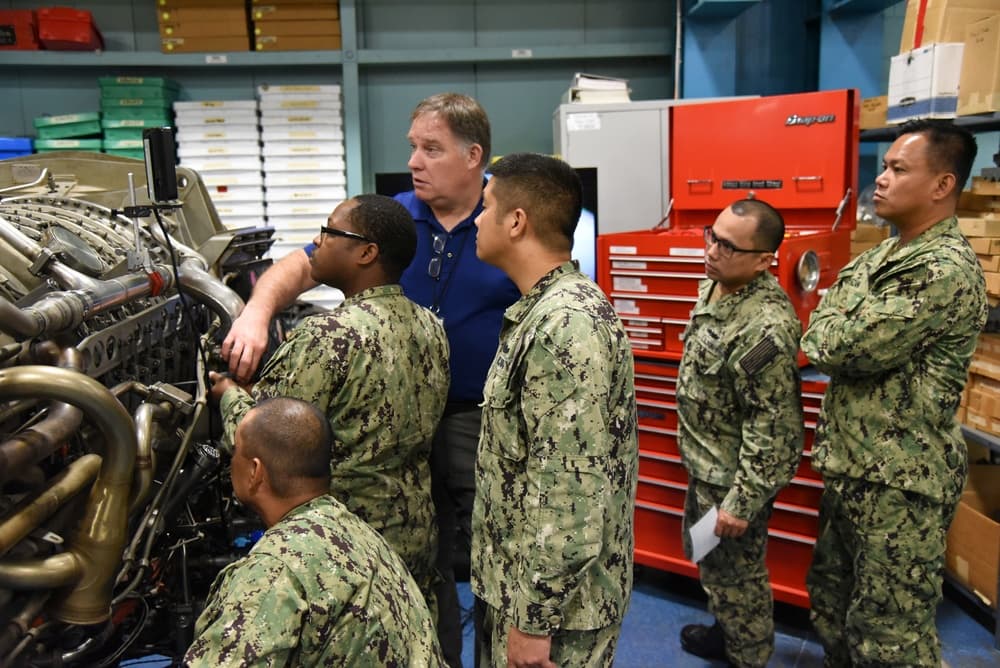
Maintains electrical components of gas turbine propulsion systems.
Overall
Quick Stats
- ✓Normal hearing
Security Clearance
No Clearance — Open to Permanent Residents
This rate does not require a security clearance and is open to lawful permanent residents (green card holders) as well as U.S. citizens.
ASVAB Requirements
Who This Is Best For
Best for electrically-focused technicians who prefer electrical troubleshooting over pure mechanical work. Strong energy sector career prospects in power generation and industrial electrical roles make this a focused specialty with good civilian transferability.
+Pros
- ✓Strong civilian career transition
–Cons
- ✗Significant sea duty
Real Opinions
+Positive
“Engineering rates get a bad rap but the job security and trade skills are legit. I went straight into a union job.”
“The best years of my life.”
–Negative & Mixed
“Underway life in engineering is hot, loud, and exhausting. You will stand watch in some miserable conditions.”
“In addition to the long hours and days away from home, the pay is not always equivalent to the pay of the civilian job.”
Page 1 of 2
Share your opinion about GSE
0 charsRecruiter vs Reality
What the recruiter says vs. what it's actually like.
🫡 Recruiter says
“Engineering rates are always in demand and you will learn a valuable trade!”
💀 Reality
Source: MyNavyRates researchThe trade skills are real but underway life in engineering spaces is hot, loud, and physically demanding. Watch rotations can be exhausting, especially on older ships.
🫡 Recruiter says
“GSE is less physically demanding than GSM.”
💀 Reality
Source: sailor forumsTrue, GSE works more with control panels and electrical systems than heavy mechanical components. But you are still in the same hot engine room environment.
Page 1 of 5
Horror Stories
Real stories people have shared about this rate. Swipe to browse.
“After 4 years in the engine room, a GS veteran developed hearing loss and constant nagging ringing in his ears. His VA claim was wrongfully denied for 16 years due to admin error before finally winning service connection.”
Story 1 of 2
Share a horror story about GSE
0 charsRelated Reading
Guides on picking a rate, ASVAB, bonuses, promotion, and life after the Navy.
Getting Started
How do you choose the right Navy rate for you?
Choosing a Navy rate means weighing your ASVAB scores, lifestyle preferences, civilian career goals, and willingness to deploy or go to sea. Start by identifying which ratings you qualify for, then narrow the list by what matters most to you.
Getting Started
What is the ASVAB and what scores do you need?
The ASVAB is a multi-aptitude test that determines which Navy ratings you qualify for. Your sub-test scores combine into line scores, and each rating has minimum line-score requirements. Higher scores open more options.
Career & Pay
Which Navy rates have the biggest enlistment bonuses in 2026?
Active Component (Active Duty) only. Per the CNRC GENADMIN dated 10 April 2026, the Nuclear Field carries the biggest source-rate bonus at $40,000 (FY26 ship dates) and a $75,000 EB cap. Top Special Operations and submarine ratings sit at $30,000 EBSR with a $60,000 EB cap. All other rates cap at $50,000. The Loan Repayment Program adds up to $65,000 on top, separately. Reserve component (SELRES) bonuses are governed by a different message and are not covered here.
Career & Pay