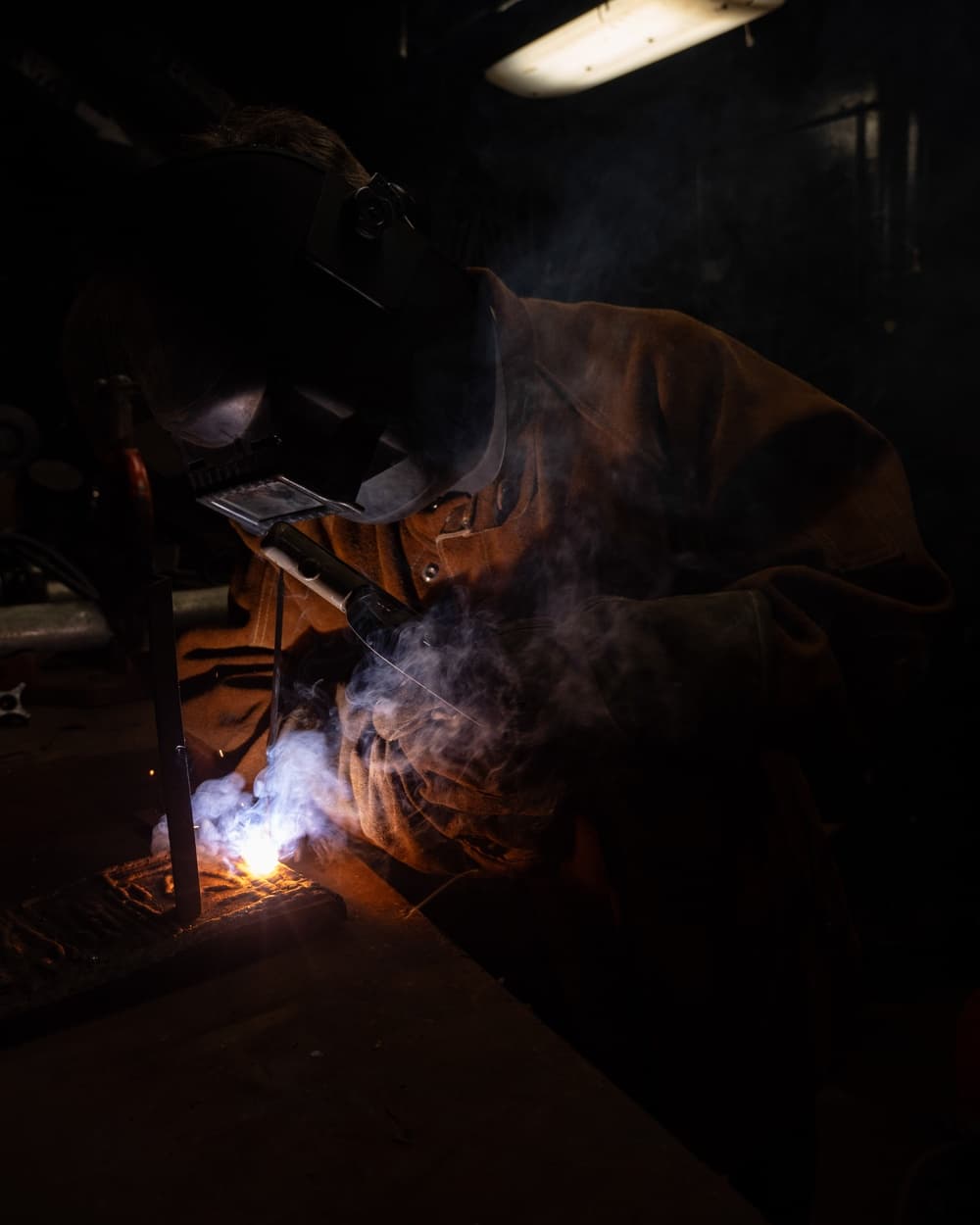
Hull Maintenance Technician
Performs welding, pipefitting, and structural repairs on Navy ships.
Overall
Quick Stats
Security Clearance
None
This rate does not require a security clearance.
ASVAB Requirements
Who This Is Best For
Best for skilled welders and fabricators who enjoy working with their hands and want certifications that transfer directly to shipyard, construction, and industrial welding careers. If you take satisfaction in keeping things operational through structural repair and metalwork, this rate provides strong trade skills with consistent civilian demand.
+Pros
- ✓Strong civilian career transition
–Cons
- ✗Significant sea duty
Real Opinions
+Positive
“A fast-paced learning environment that can teach you new things. The culture of the Navy is like no other organization that can teach and mold leaders from nothing.”
“AWS welding certifications are genuinely valuable and the civilian demand for certified welders is strong, with shipyard work, industrial maintenance, and union pipe trades all recruiting from this rate.”
“Engineering rates get a bad rap but the job security and trade skills are legit. I went straight into a union job.”
–Critical & Mixed
“You weld in spaces that are too hot, too small, and too awkward for the job. Shipboard welding is nothing like a shop environment.”
“Underway life in engineering is hot, loud, and exhausting. You will stand watch in some miserable conditions.”
“HTs weld in spaces that are too hot, too small, and too awkward for the job. The plumbing side means owning every pipe system on the ship, including the CHT sewage system, which is exactly as unpleasant as it sounds when it breaks. Shipboard welding requires working overhead in bilges and confined spaces. Not for anyone who avoids dirt, heat, noise, or tight spaces.”
Recruiter vs Reality
What the recruiter says vs. what it's actually like.
🫡 Recruiter says
“Engineering rates are always in demand and you will learn a valuable trade!”
💀 Reality
Source: MyNavyRates researchThe trade skills are real but underway life in engineering spaces is hot, loud, and physically demanding. Watch rotations can be exhausting, especially on older ships.
🫡 Recruiter says
“HT is one of the best-kept secrets in the Navy.”
💀 Reality
Source: sailor forumsHT welding and fabrication skills are genuinely valuable. Many HTs leave for six-figure civilian welding careers. The downside is the working conditions aboard ship can be cramped and dirty.
🫡 Recruiter says
“Hull Technicians are welders and pipefitters.”
💀 Reality
Source: veteran feedbackTrue, and these are valuable trades. However, HT also handles sewage systems (CHT), and junior HTs spend considerable time dealing with the less glamorous plumbing side of the job.
🫡 Recruiter says
“HTs are skilled welders and metalworkers — you'll earn certifications the civilian world values.”
💀 Reality
The welding certs (AWS) are genuinely valuable. But earning them means welding overhead in bilges, in confined spaces with a safety watch, in positions that wreck your back and knees.
🫡 Recruiter says
“HTs do important structural work — you keep the ship watertight and mission-ready.”
💀 Reality
You also own the CHT system — Collection, Holding, and Transfer, which is the sewage system. When it backs up, you fix it. An uncomfortable amount of the job involves plumbing and sewage.
🫡 Recruiter says
“HT is a versatile rate — welding, plumbing, carpentry, sheet metal, pipe fitting.”
💀 Reality
Versatile means you are the jack-of-all-trades who gets called for everything. Leaking pipe at 0200? HT. Door won't close? HT. Something cracked? HT. You will never run out of work.
🫡 Recruiter says
“HTs work closely with Damage Controlmen — it's a natural team.”
💀 Reality
HTs and DCs share a division but do different work. DCs focus on firefighting and damage control programs. HTs do fabrication, welding, and pipe repair. Your primary job is fixing things with tools and torches.
🫡 Recruiter says
“HT has great civilian career prospects in welding and construction.”
💀 Reality
Civilian shipyards, union pipe trades, and construction all hire former HTs. The transition is smoother than many rates because you have tangible, certifiable skills. But the best-paying jobs may require additional certs.
🫡 Recruiter says
“You'll learn to work with every type of metal and fabrication technique.”
💀 Reality
On a ship, the materials are often corroded, access is terrible, and conditions are hazardous — hot work in confined spaces requires permits, fire watches, and safety briefs. Every weld job starts with 30 minutes of paperwork before you strike an arc.
Training Pipeline — Total ~16 weeks (4 months)
Ship Date Calculator
Enter your MEPS ship date to see when you'll complete each stage.
Promotion SpeedEarn higher pay fasterSlowManning 78% (E-4/E-5)
| Cycle (Year) | Eligible | Selected | Promotion % |
|---|---|---|---|
| E-4252-Spring(2024) | 87 | 43 | 49% |
| E-4252-Fall(2024) | 138 | 26 | 19% |
| E-5252-Spring(2024) | 116 | 52 | 45% |
| E-5252-Fall(2024) | 130 | 37 | 28% |
| E-6252-Spring(2024) | 42 | 34 | 81% |
| E-6252-Fall(2024) | 112 | 7 | 6% |
Bonuses — Click here to see your military pay
Enlistment Bonus
No active bonus for this rate
You May Qualify for a Navy Enlisted Classification (NEC)
Specialties within this rate you can select, some with additional compensation. Each NEC has its own training, bonus potential, and career path.
Primary specialty code for Hull Maintenance Technician rating
Advanced specialty code for experienced Hull Maintenance Technician personnel
Potential Civilian Post-Navy Outcomes
Welder
Transferability: 7/10
$38k–$62k
Pipefitter
Transferability: 7/10
$42k–$70k
Free Certifications & Credentials
Certifications and licenses the Navy will pay for free through Navy COOL and on-the-job training.
Certified Welder (CW)
AWS
OSHA 30-Hour Safety
OSHA
Non-Destructive Testing (NDT) Level II
ASNT
Lifestyle4/10
Ship vs. Shore Split
60% / 40%
Deployment Frequency
Moderate
Physical Demand
high — mixed
Watch Standing
3-section underway, 4-section in port
In a 4-section rotation, the crew is divided into four teams. Each team stands a 6-hour watch shift, then has 18 hours off before their next watch. In port, you stand 24-hour duty roughly every 4 days — meaning you stay aboard the ship overnight on your duty day.
Watch qualifications vary by command and platform. Expect to qualify within 90 days of reporting.
Common Duty Stations
—
Schools + spouse jobs
—
Avg waitlist for on-base
95
100 = national avg
—
Schools + spouse jobs
—
Avg waitlist for on-base
135
100 = national avg
—
Schools + spouse jobs
—
Avg waitlist for on-base
92
100 = national avg