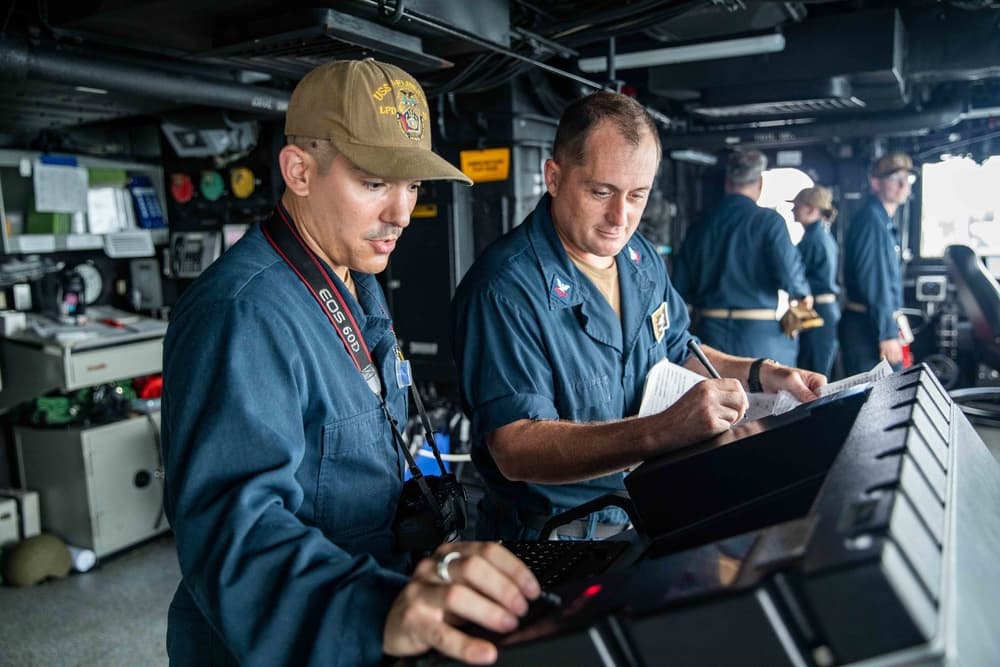
Intelligence Specialist
Intelligence Specialists collect, analyze, and report intelligence data from various sources. They prepare briefings, targeting packages, and threat assessments.
Overall
Quick Stats
Security Clearance
Top Secret / Sensitive Compartmented Information~$15K–$50K civilian sector value
Requires a Single Scope Background Investigation (SSBI), including interviews with references, financial review, and a possible polygraph. The process typically takes 6–12 months and is initiated during your training pipeline.
ASVAB Requirements
Who This Is Best For
Best for critical thinkers who enjoy research, data analysis, and connecting dots across multiple information sources. TS/SCI clearance and direct analytical experience are highly sought after by CIA, DIA, NSA, and defense intelligence contractors — making this one of the strongest government career pipelines. Ideal for intellectually curious individuals who want their work to have direct strategic impact.
+Pros
- ✓Active enlistment bonus available
- ✓Strong civilian career transition
–Cons
Real Opinions
+Positive
“Most enjoyable is knowing that you have the best job security in the world.”
“Travel the world, get your college paid for, and bond with the coolest people you never would have met otherwise.”
“Best decision I made was going IS. The clearance alone is worth it, and the skills transfer directly to six-figure civilian jobs.”
–Critical & Mixed
“The best performers end up getting burnt out because performance evaluations are not based on work output. The best evaluation scores are given to people who volunteer the most.”
“Be prepared for shore duty boredom and watch rotations. The clearance process is also stressful and takes forever.”
“Most Intelligence Specialists love their job so much they end up staying in and retiring from the Navy. However, you spend enormous amounts of time building PowerPoint briefings. Favoritism is a major issue, leadership can be hit or miss, and the enlisted pay does not match the responsibility level.”
Recruiter vs Reality
What the recruiter says vs. what it's actually like.
🫡 Recruiter says
“You will work with cutting-edge cyber technology and get a top secret clearance!”
💀 Reality
Source: MyNavyRates researchThe clearance is real and valuable, but daily work can involve a lot of routine network maintenance and help-desk tickets. Cutting-edge tech varies widely by command.
🫡 Recruiter says
“Intelligence Specialists work directly with the CIA and NSA.”
💀 Reality
Source: veteran feedbackIS primarily supports fleet tactical intelligence: analyzing ship movements, producing briefings for commanding officers, and building targeting packages. Interagency work with CIA/NSA is rare and usually reserved for senior IS or specific shore billets.
🫡 Recruiter says
“IS is all analytical work in an air-conditioned office.”
💀 Reality
Source: sailor forumsAboard ships, IS stands watches in the Combat Information Center just like OS. You also deploy with expeditionary units where conditions are not office-like. Shore billets are more comfortable.
🫡 Recruiter says
“IS gives you a TS/SCI that is worth $100K in the civilian world.”
💀 Reality
Source: reddit r/newtothenavyThe clearance is valuable, but the $100K figure requires additional experience and certifications beyond what a first-term IS typically has. Starting civilian intel analyst salaries are closer to $55-70K.
🫡 Recruiter says
“Intelligence Specialists do James Bond-level intelligence work.”
💀 Reality
Most junior ISs spend their time building PowerPoint briefing slides, maintaining intelligence databases, and standing CVIC or CIC watches. Analytical work increases with seniority, but your first years are heavily production-focused.
🫡 Recruiter says
“IS is a shore-heavy rate with great quality of life.”
💀 Reality
IS is roughly 50% sea duty. Carrier and amphib ISs work in CVIC during flight ops, which means long hours during deployment. Shore duty at NIOC or a fusion center can have better hours, but shift work is common.
🫡 Recruiter says
“IS training prepares you for CIA and FBI jobs after the Navy.”
💀 Reality
Three-letter agencies do hire former ISs, but they want GEOINT, SIGINT, or HUMINT specialization plus often a degree. A generic "intelligence specialist" resume without a niche or degree puts you at a disadvantage against candidates who have both.
🫡 Recruiter says
“IS gets a TS/SCI clearance and works with classified material daily.”
💀 Reality
The clearance is real and valuable. But working with classified material means you cannot discuss your work with family or friends, ever. The isolation from not being able to share your professional life takes a toll over time.
🫡 Recruiter says
“IS does the most important work on the ship — intelligence drives operations.”
💀 Reality
Intelligence does drive operations, but the CO and staff make the decisions. Your job is to provide products and briefings that inform those decisions. When your analysis is ignored or overridden, you still did your job — learning to separate your ego from your work product is a key IS skill.
🫡 Recruiter says
“IS has great advancement because the Navy always needs intel.”
💀 Reality
IS advancement is average to below-average depending on the cycle. The rate is popular, which means more competition. A PMP certification or GEOINT specialty can help differentiate you for advancement and civilian transition.
Training Pipeline — Total ~21 weeks (5 months)
Ship Date Calculator
Enter your MEPS ship date to see when you'll complete each stage.
Promotion SpeedEarn higher pay fasterSlowManning 82% (undermanned)
| Cycle (Year) | Eligible | Selected | Promotion % |
|---|---|---|---|
| E-4252-Spring(2024) | 206 | 26 | 13% |
| E-4252-Fall(2024) | 160 | 78 | 49% |
| E-5252-Spring(2024) | 159 | 31 | 19% |
| E-5252-Fall(2024) | 183 | 48 | 26% |
| E-6252-Spring(2024) | 145 | 15 | 10% |
| E-6252-Fall(2024) | 128 | 15 | 12% |
Bonuses — Click here to see your military pay
Enlistment Bonus
Bonus by Contract Length
6-Year Contract
$15,000
5-Year Contract
$11,250
4-Year Contract
$7,500
How to Qualify
- Sign a contract for this rate at MEPS — bonus eligibility is locked at the time of contract signing
- Ship to boot camp and successfully complete Recruit Training Command (RTC) at Great Lakes, IL
- Complete A-School and any required follow-on training in the IS pipeline
- Receive your rate assignment and report to your first duty station
- Bonus is typically paid in installments — 50% after completing training, remainder in anniversary payments
Important Details
- •Longer contracts receive higher bonus amounts
- •Bonus amounts are subject to federal income tax withholding (typically 22%)
- •If you fail to complete training or are separated early, you may be required to repay a prorated portion
- •Bonus availability and amounts change frequently based on Navy manning needs — confirm with your recruiter
- •This rate requires a security clearance — failure to obtain clearance may affect bonus eligibility
You May Qualify for a Navy Enlisted Classification (NEC)
Specialties within this rate you can select, some with additional compensation. Each NEC has its own training, bonus potential, and career path.
Primary specialty code for Intelligence Specialist rating
Advanced specialty code for experienced Intelligence Specialist personnel
Potential Civilian Post-Navy Outcomes
Intelligence Analyst
Transferability: 8.2/10
$65k–$110k
Geospatial Analyst
Transferability: 7.8/10
$62k–$105k
Free Certifications & Credentials
Certifications and licenses the Navy will pay for free through Navy COOL and on-the-job training.
CompTIA Security+
CompTIA
Certified Defense All-Source Analyst
DIA
Lifestyle8/10
Ship vs. Shore Split
30% / 70%
Deployment Frequency
Moderate
Physical Demand
low — indoor
Watch Standing
4-section watch rotation (8 on / 16 off)
In a 4-section rotation, the crew is divided into four teams. Each team stands a 6-hour watch shift, then has 18 hours off before their next watch. In port, you stand 24-hour duty roughly every 4 days — meaning you stay aboard the ship overnight on your duty day.
Watch stations often in climate-controlled spaces. SCIF access may be required for some watches.
Common Duty Stations
—
Schools + spouse jobs
—
Avg waitlist for on-base
95
100 = national avg
—
Schools + spouse jobs
—
Avg waitlist for on-base
135
100 = national avg
—
Schools + spouse jobs
—
Avg waitlist for on-base
155
100 = national avg