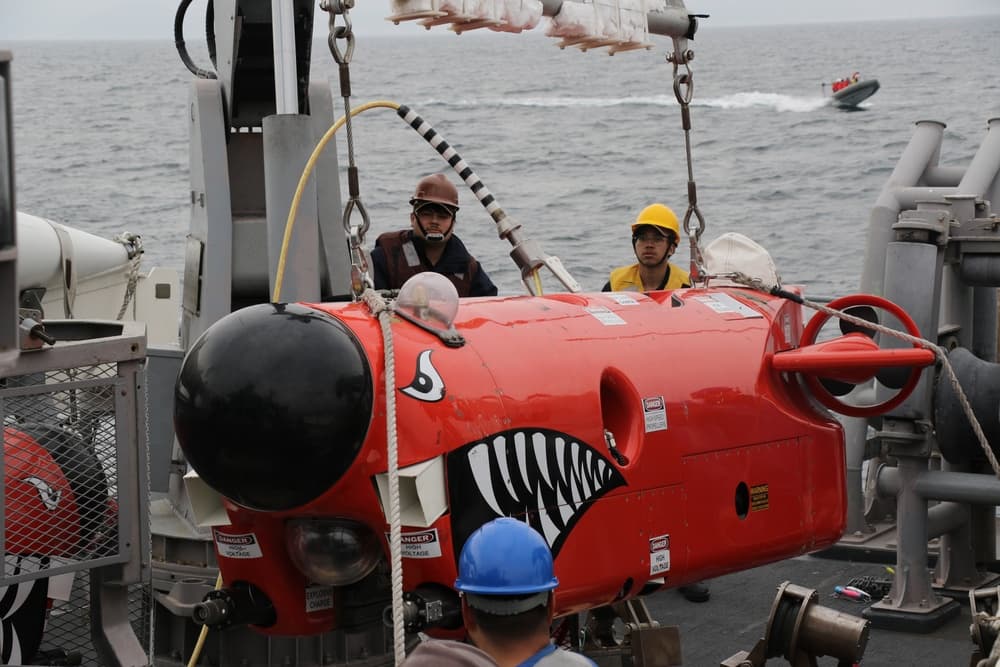
Mineman
Maintains and deploys naval mines and mine countermeasure systems.
Overall
Quick Stats
Security Clearance
Secret~$3K–$15K civilian sector value
Requires a National Agency Check with Local Agency Check and Credit Check (NACLC). Processing typically takes 1–3 months and is initiated early in your training pipeline.
ASVAB Requirements
Who This Is Best For
Best for technically skilled individuals who want a unique, specialized niche in a small, tight-knit community. If you prefer uncommon expertise over mainstream popularity and enjoy working with complex ordnance systems, this rate offers deployment opportunities and experiences most sailors will never have.
+Pros
- ✓Above-average promotion rate
- ✓Strong civilian career transition
–Cons
Real Opinions
+Positive
“I would recommend MN to anyone considering it. The training is solid and the community takes care of its own.”
“Mineman is one of the most unique jobs in the military. You work with mine countermeasures, underwater demolition, and explosive ordnance — genuinely exciting work. The small community creates a tight-knit brotherhood where everybody knows everybody. The EOD crossover skills make MNs attractive to defense contractors.”
“MN advancement has historically been above average because the community is small and undermanned. The A-school in San Antonio teaches mechanical, electrical, and explosive handling skills that are hard to get anywhere else. Many MNs describe a real sense of mission importance.”
–Critical & Mixed
“Being a mineman can be fun but sometimes stressful, especially depending where you get stationed.”
“There are peaks but mostly lows, and the leadership is extremely lacking with little concern for quality of life for lower ranked sailors.”
“Like any rate, MN has its downsides. Long hours, time away from family, and Navy bureaucracy are real.”
“MN is a dying rate in some ways — the Navy has been reducing mine warfare assets for years. Duty station options are extremely limited since MCM ships are only homeported in a few locations. The small community means you keep seeing the same people at every command, which can be good or bad.”
Recruiter vs Reality
What the recruiter says vs. what it's actually like.
🫡 Recruiter says
“The MN rate offers great training and career advancement opportunities!”
💀 Reality
Source: MyNavyRates researchTraining and advancement are available but vary by command and manning. Ask specific questions about sea/shore rotation, typical duty stations, and advancement rates for MN.
🫡 Recruiter says
“MN is a small elite community.”
💀 Reality
Source: sailor forumsMN is small, which means tight bonds but also limited duty station options and slower advancement. Most billets are on mine countermeasure ships or at mine warfare commands.
🫡 Recruiter says
“Minemen work with underwater explosives.”
💀 Reality
Source: veteran feedbackMN maintains and deploys naval mines and mine countermeasure equipment. The work is specialized and safety-critical, but most of your time is maintenance and certification drills, not actual mine operations.
🫡 Recruiter says
“Minemen are a hybrid rate — you learn five jobs in one.”
💀 Reality
On undermanned MCM ships, MNs fill BM, GM, QM, and OS roles because there is nobody else. You will learn seamanship, weapons handling, navigation, and CIC operations. But that also means you are doing everyone else's job on top of your own mine warfare duties.
🫡 Recruiter says
“Mine warfare is the future of naval combat — MN is a growing field.”
💀 Reality
Mine warfare is strategically important, but the community is in platform transition. Avenger-class MCMs are decommissioning, and the LCS mine countermeasures mission package has faced repeated delays. MNs on LCS often find themselves in non-traditional crew roles with limited MIW qualification opportunities.
🫡 Recruiter says
“MN is a tight-knit elite community with strong bonds.”
💀 Reality
The small community (~1,050 sailors) does create genuine camaraderie. But small also means limited advancement opportunity, fewer shore duty options, and less flexibility in detailing. Most billets are on MCM ships homeported in San Diego or Sasebo, Japan.
Training Pipeline — Total ~22 weeks (5 months)
Ship Date Calculator
Enter your MEPS ship date to see when you'll complete each stage.
Promotion SpeedEarn higher pay fasterFastManning 95% (E-4/E-5)
| Cycle (Year) | Eligible | Selected | Promotion % |
|---|---|---|---|
| E-4252-Spring(2024) | 86 | 66 | 77% |
| E-4252-Fall(2024) | 76 | 99 | 130% |
| E-5252-Spring(2024) | 116 | 61 | 53% |
| E-5252-Fall(2024) | 154 | 15 | 10% |
| E-6252-Spring(2024) | 31 | 8 | 26% |
| E-6252-Fall(2024) | 122 | 20 | 16% |
Bonuses — Click here to see your military pay
Enlistment Bonus
No active bonus for this rate
You May Qualify for a Navy Enlisted Classification (NEC)
Specialties within this rate you can select, some with additional compensation. Each NEC has its own training, bonus potential, and career path.
Primary specialty code for Mineman rating
Advanced specialty code for experienced Mineman personnel
Potential Civilian Post-Navy Outcomes
Explosive Ordnance Technician
Transferability: 5/10
$45k–$70k
Lifestyle5/10
Ship vs. Shore Split
55% / 45%
Deployment Frequency
Moderate
Physical Demand
medium — mixed
Watch Standing
3-section underway, 4-section in port
In a 4-section rotation, the crew is divided into four teams. Each team stands a 6-hour watch shift, then has 18 hours off before their next watch. In port, you stand 24-hour duty roughly every 4 days — meaning you stay aboard the ship overnight on your duty day.
Watch qualifications vary by command and platform. Expect to qualify within 90 days of reporting.
Common Duty Stations
—
Schools + spouse jobs
—
Avg waitlist for on-base
95
100 = national avg
—
Schools + spouse jobs
—
Avg waitlist for on-base
135
100 = national avg
—
Schools + spouse jobs
—
Avg waitlist for on-base
92
100 = national avg