 OS
OSOperations Specialist(OS Navy Rating)
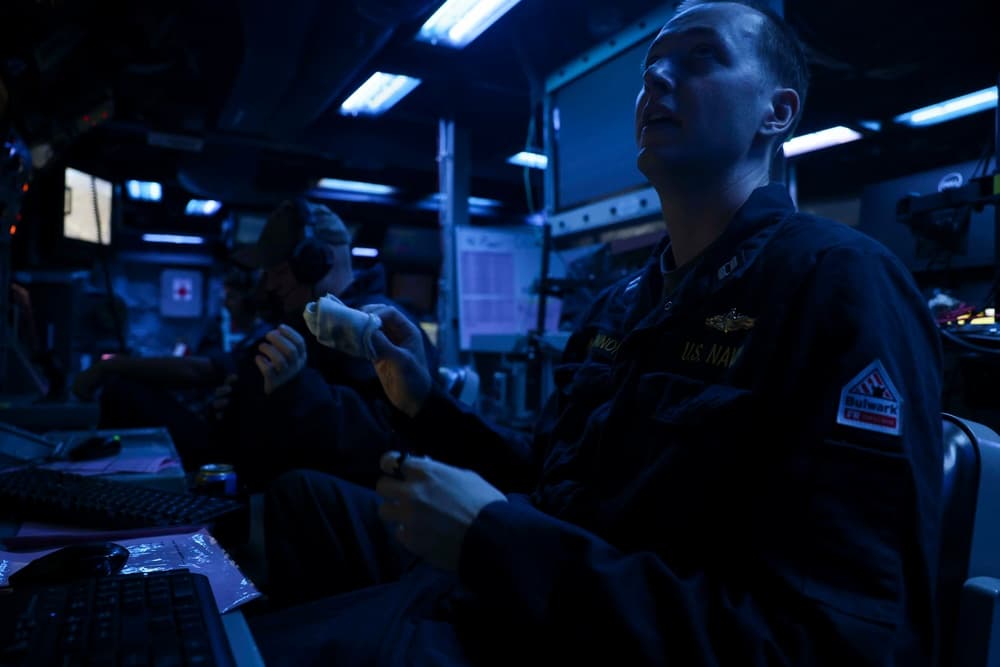
Operations Specialists operate radar, navigation, and communications equipment in Combat Information Centers (CIC). They track surface and air contacts, coordinate tactical operations, and manage tactical data systems.
Overall
Quick Stats
- ✓Normal color perception
- ✓Normal hearing
- ✓No speech impediment
Security Clearance
Secret~$3K–$15K civilian sector value
Requires a National Agency Check with Local Agency Check and Credit Check (NACLC). Processing typically takes 1–3 months and is initiated early in your training pipeline.
ASVAB Requirements
AFQT Minimum
50
Line-score options — meet any one
Who This Is Best For
Best for analytical multitaskers who thrive under pressure and have strong situational awareness. If you enjoy tracking multiple data streams simultaneously and making rapid tactical assessments, this rate builds experience that translates to air traffic management, intelligence analysis, and defense operations roles. Ideal for individuals who perform best when the pace is fast and the stakes are real.
+Pros
- ✓Strong opportunity advancement outlook
- ✓Strong civilian career transition
–Cons
- ✗Significant sea duty
Real Opinions
+Positive
“Operations specialists live in CIC and track everything on the radar. It is like a real-time strategy game.”
“OS Sailors enjoy a cool, clean, comfortable work environment in the air-conditioned CIC — the tactical nerve center of the ship. They detect and track ships, aircraft, and missiles, serving as the eyes and ears of Navy vessels.”
–Negative & Mixed
“Ship heavy but the tactical experience is valuable. Good path to OCS if you want to go officer.”
“The hours are long and there is a constant demand to do more with less. Poor leadership leads to high turnover.”
Page 1 of 2
Share your opinion about OS
0 charsRecruiter vs Reality
What the recruiter says vs. what it's actually like.
🫡 Recruiter says
“You will be on the bridge driving ships and leading sailors from day one!”
💀 Reality
Source: MyNavyRates researchLeadership opportunities are real but come with long hours on the bridge or topside in all conditions. These rates tend to have heavy workloads and less personal time underway.
🫡 Recruiter says
“Operations Specialist is like being in a war room.”
💀 Reality
Source: veteran feedbackOS work involves staring at radar screens for 12-hour watches. It can be monotonous. The exciting tactical scenarios happen during exercises, not daily operations.
Page 1 of 3
Horror Stories
Real stories people have shared about this rate. Swipe to browse.
“Sleep deprivation in OS watch crews was a contributing factor in the 2017 collisions of USS McCain and USS Fitzgerald with commercial ships. Sailors on affected ships worked 6 on, 6 off with no adequate rest.”
Story 1 of 3
Share a horror story about OS
0 charsRelated Reading
Guides on picking a rate, ASVAB, bonuses, promotion, and life after the Navy.
Getting Started
How do you choose the right Navy rate for you?
Choosing a Navy rate means weighing your ASVAB scores, lifestyle preferences, civilian career goals, and willingness to deploy or go to sea. Start by identifying which ratings you qualify for, then narrow the list by what matters most to you.
Getting Started
What is the ASVAB and what scores do you need?
The ASVAB is a multi-aptitude test that determines which Navy ratings you qualify for. Your sub-test scores combine into line scores, and each rating has minimum line-score requirements. Higher scores open more options.
Career & Pay
Which Navy rates have the biggest enlistment bonuses in 2026?
Active Component (Active Duty) only. Per the CNRC GENADMIN dated 10 April 2026, the Nuclear Field carries the biggest source-rate bonus at $40,000 (FY26 ship dates) and a $75,000 EB cap. Top Special Operations and submarine ratings sit at $30,000 EBSR with a $60,000 EB cap. All other rates cap at $50,000. The Loan Repayment Program adds up to $65,000 on top, separately. Reserve component (SELRES) bonuses are governed by a different message and are not covered here.
Career & Pay