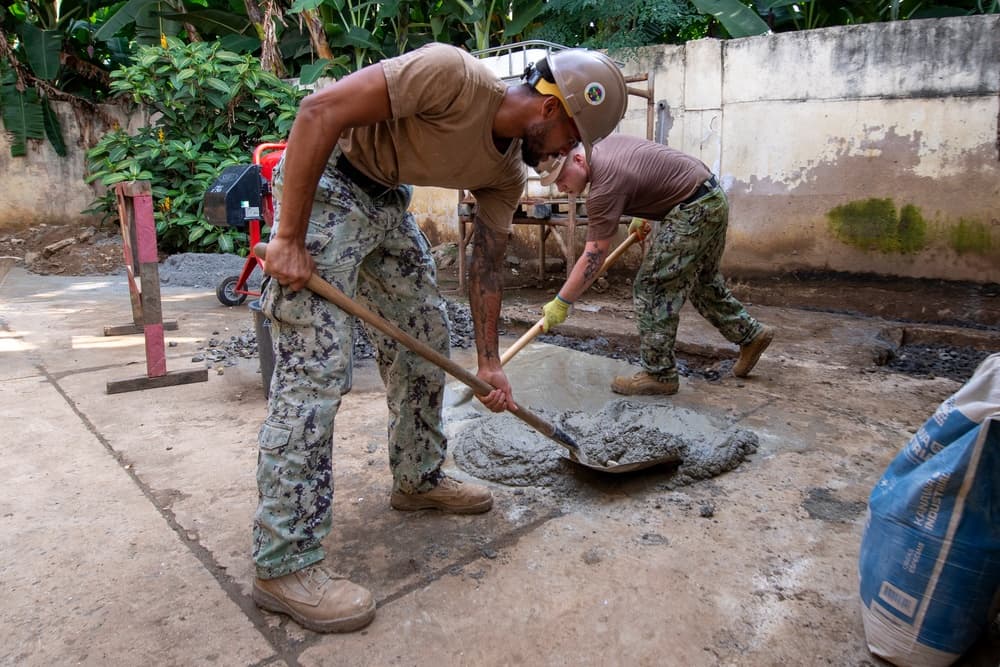
Utilitiesman
Installs and maintains plumbing, heating, and air conditioning systems.
Overall
Quick Stats
Security Clearance
None
This rate does not require a security clearance.
ASVAB Requirements
Who This Is Best For
Best for individuals who want to leave the Navy with journeyman-level plumbing and HVAC skills — two of the most in-demand and highest-paying trades in the civilian market. International deployment experience with the Seabees adds variety, while the trade credentials provide immediate post-Navy employability. One of the strongest ROI rates for trade-career seekers.
+Pros
- ✓Strong civilian career transition
–Cons
Real Opinions
+Positive
“UT covers plumbing, HVAC, and water purification. You learn three trades in one rate which makes you very marketable.”
“HVAC technicians make excellent money on the outside. UT gives you a head start on those certifications.”
“Seabees are the best-kept secret in the Navy. Great deployments, real skills, and you actually build stuff.”
–Critical & Mixed
“The work is not glamorous. You are dealing with sewage systems and broken pipes. But someone has to do it.”
“Deployments can be to some rough locations. And you are still in the Navy, so expect Navy nonsense on top of the construction work.”
“Utilitiesman experience maps well to civilian plumbing, pipefitting, HVAC, and facilities maintenance — that's the good news. The bad news is the same advancement bottleneck that plagues every Seabee rate. Reaching E-6 takes about 10 years for a UT. You're working with sewage systems and plumbing in field conditions. Not glamorous work.”
“If you combine the skills of an HVAC technician with a municipal utilities worker, that's basically what a UT does. The 5-year enlistment obligation is standard, and you should expect field conditions for much of your career. The promotion timeline is painfully slow and the small community size limits your options.”
Recruiter vs Reality
What the recruiter says vs. what it's actually like.
🫡 Recruiter says
“Seabees travel the world building things and have great quality of life!”
💀 Reality
Source: MyNavyRates researchQuality of life is generally good but deployments to austere locations (desert, jungle) are common. You will do real construction but also a lot of maintenance and military duties.
🫡 Recruiter says
“Utilitiesmen handle plumbing and HVAC.”
💀 Reality
Source: veteran feedbackUT installs and maintains water, sewage, and HVAC systems. The trade skills are directly transferable to civilian plumbing and HVAC careers. Deployments involve building infrastructure from scratch.
🫡 Recruiter says
“You'll learn plumbing, HVAC, and water treatment — three trades in one rate.”
💀 Reality
You get exposure to all three but mastery of none. Civilian plumbers and HVAC techs spend years in dedicated apprenticeships. You'll be a jack-of-all-trades, which sounds great until employers want a journeyman license.
🫡 Recruiter says
“Utilitiesmen keep bases running with essential water and power systems.”
💀 Reality
On deployment, you're the person called at 3 AM when the water purification unit breaks, the latrine overflows, or the AC dies. You're on call 24/7 for every utility emergency, and the least thanked when everything works.
🫡 Recruiter says
“Utilitiesman is a critical, respected rate in the Seabee community.”
💀 Reality
UTs handle sewage, water treatment, and plumbing — important but not glamorous. The Builders get the hero shots while you're fixing the head that everyone takes for granted.
🫡 Recruiter says
“UT skills are in high demand — plumbers and HVAC techs make great money.”
💀 Reality
Civilian plumbing and HVAC require state-specific licenses the Navy doesn't count in most jurisdictions. Expect 1-3 years of additional civilian apprenticeship before earning top-tier wages.
🫡 Recruiter says
“It's a utility maintenance job — you'll be safely behind the lines.”
💀 Reality
You're a Seabee with full combat training. Your water purification unit or generator farm might be the most valuable target on the camp. "Behind the lines" doesn't exist in expeditionary construction.
🫡 Recruiter says
“Every day brings new challenges as a Utilitiesman.”
💀 Reality
Homeport days are heavy on preventive maintenance, equipment inventory, and training PowerPoints. Your biggest "challenge" might be tracking down a replacement valve through the Navy supply system that takes weeks.
🫡 Recruiter says
“Utilitiesmen advance well because the skills are always needed.”
💀 Reality
UT advancement is constrained by the same small Seabee quotas. Being "needed" doesn't translate to fast promotion when there are only a handful of slots each cycle.
Training Pipeline — Total ~20 weeks (5 months)
Ship Date Calculator
Enter your MEPS ship date to see when you'll complete each stage.
Promotion SpeedEarn higher pay fasterAverageManning 78% (E-4/E-5)
| Cycle (Year) | Eligible | Selected | Promotion % |
|---|---|---|---|
| E-4252-Spring(2024) | 214 | 106 | 50% |
| E-4252-Fall(2024) | 155 | 80 | 52% |
| E-5252-Spring(2024) | 83 | 43 | 52% |
| E-5252-Fall(2024) | 83 | 43 | 52% |
| E-6252-Spring(2024) | 56 | 14 | 25% |
| E-6252-Fall(2024) | 107 | 26 | 24% |
Bonuses — Click here to see your military pay
Enlistment Bonus
No active bonus for this rate
You May Qualify for a Navy Enlisted Classification (NEC)
Specialties within this rate you can select, some with additional compensation. Each NEC has its own training, bonus potential, and career path.
Primary specialty code for Utilitiesman rating
Advanced specialty code for experienced Utilitiesman personnel
Potential Civilian Post-Navy Outcomes
Plumber / HVAC Technician
Transferability: 8/10
$42k–$72k
Lifestyle7/10
Ship vs. Shore Split
35% / 65%
Deployment Frequency
Moderate
Physical Demand
medium — outdoor
Watch Standing
Standard workday in garrison, rotating security watch deployed
Watch standing is a 24-hour duty rotation where sailors take turns manning critical positions aboard the ship or at their command. The rotation determines how frequently you stand watch and how much rest time you get between shifts.
Watch qualifications vary by command and platform. Expect to qualify within 90 days of reporting.
Common Duty Stations
—
Schools + spouse jobs
—
Avg waitlist for on-base
155
100 = national avg
—
Schools + spouse jobs
—
Avg waitlist for on-base
125
100 = national avg
—
Schools + spouse jobs
—
Avg waitlist for on-base
80
100 = national avg